
- July 11, 2026
- Games
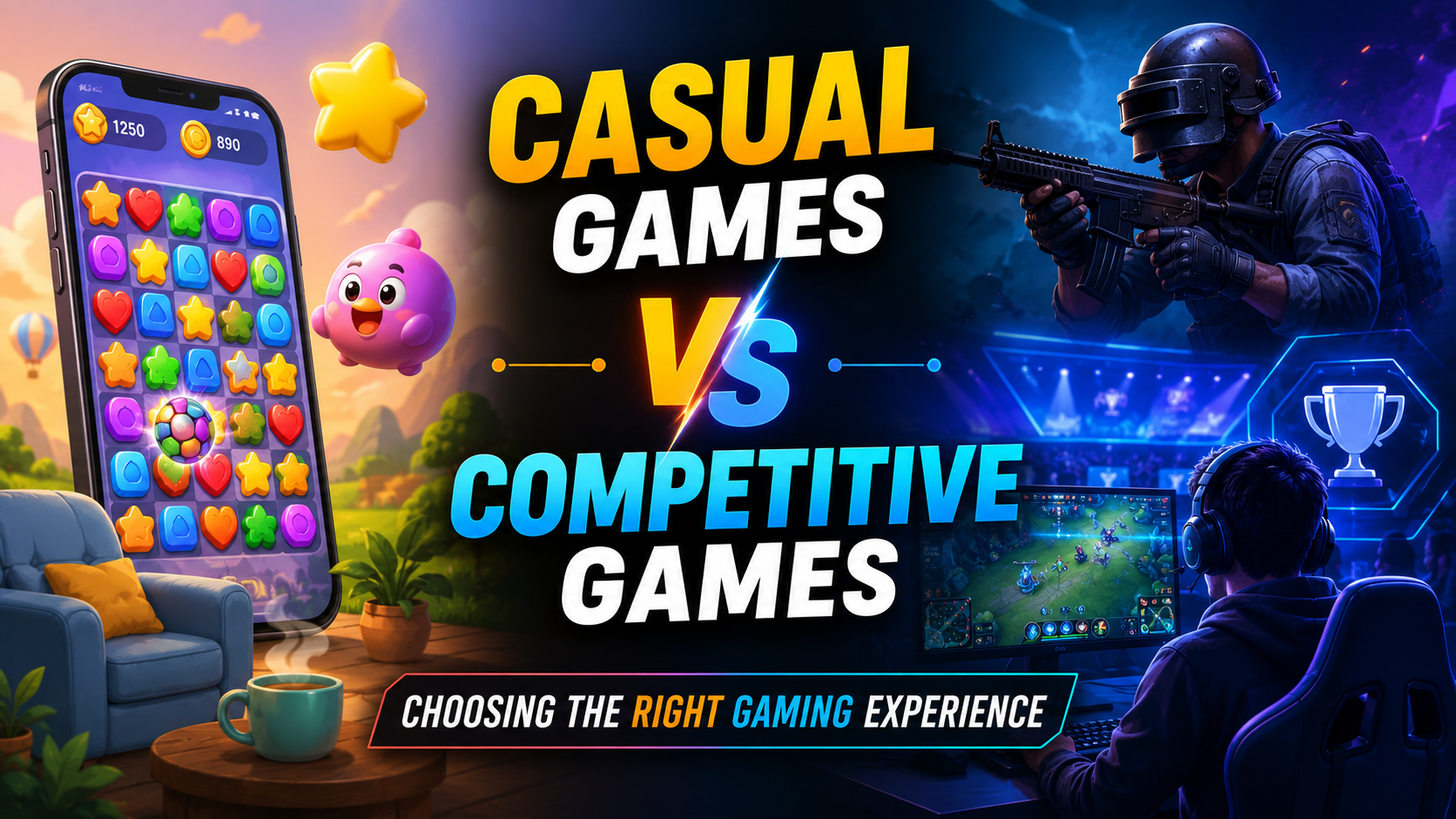
Casual Games vs Competitive Games: Choosing the Right Gaming Experience
Introduction
Gaming has emerged as one of the biggest entertainment sectors in the world, providing experiences for nearly everyone. Today's gaming scene is more diverse than ever, ranging from casual five-minute puzzle games to competitive multiplayer experiences. With the ever-changing landscape of technology, gamers can enjoy a wide variety of genres, platforms, and communities, ensuring they have the opportunity to play their favorite games in the way that suits them best.
Of all the types of games available today, two established styles continue to attract large numbers of players: casual games and competitive games. Both provide entertainment and engaging gameplay, but they are designed with different objectives. Casual games emphasize ease of play, enjoyment, accessibility, and relaxation, while competitive games focus more heavily on skill development, strategy, teamwork, rankings, and long-term progression.
There is no universally right or wrong choice between them. The decision depends on what a player wants to gain from the experience. Some people prefer to unwind by playing a few simple games in their browser, while others enjoy competing in challenging environments where rankings, tournaments, teamwork, and personal improvement are important parts of the experience.
Casual gaming has also become more accessible through modern browser-based gaming platforms that do not require downloads or lengthy installations. Platforms such as Volnyn Games allow users to explore a growing library of browser-based games across several categories and enjoy quick entertainment whenever it suits their schedule.
This article explores the differences between casual games and competitive games, examines the advantages of each style, and helps players determine which type of gaming best matches their interests, available time, and preferred level of challenge.
Table of Contents
- Understanding Casual Games
- Understanding Competitive Games
- Accessibility and Ease of Entry
- Time Commitment and Flexibility
- Learning Curve and Skill Development
- Social Interaction and Community
- Stress, Relaxation, and Entertainment
- Which Gaming Style Is Right for You?
- The Future of Both Gaming Experiences
- Final Thoughts
- Frequently Asked Questions
Understanding Casual Games
With casual games, simplicity and accessibility are the main priorities. These games are designed to provide enjoyable entertainment without requiring players to spend a great deal of time learning complicated mechanics or advanced controls.
In most casual games, players can begin almost immediately. Instead of lengthy tutorials or complex gameplay systems, they present simple tasks that are easy to understand, even for users who have limited gaming experience or are trying the title for the first time.
Casual gaming includes a wide variety of experiences such as puzzle games, Bubble Shooter Games, Educational Games, word games, Card Games, Car Games, arcade experiences, and Brain Games.
The growth of browser-based gaming has strengthened this category by making casual games easy to access through web browsers. Players do not have to download software or use large amounts of storage space before enjoying a quick gaming session.
This combination of convenience and simplicity has helped casual games become one of the largest and fastest-growing sections of the gaming industry.
Understanding Competitive Games
Competitive games focus more heavily on performance, improvement, and measurable results. These games are designed to encourage players to learn skills, refine strategies, collaborate with teammates, and compete against other players in increasingly demanding situations.
Rankings, leaderboards, seasonal progression, tournaments, and organized multiplayer systems are common features within competitive gaming. These elements provide players with clear goals and measurable indicators of improvement.
Popular competitive genres include first-person shooters, multiplayer online battle arenas, sports simulations, real-time strategy games, fighting games, tactical shooters, and team-based action games.
Competitive players often enjoy continuously improving their abilities and measuring their progress against other skilled participants. This creates a highly engaging experience for people who enjoy challenge, structured competition, teamwork, and personal growth.
Accessibility and Ease of Entry
Accessibility is one of the clearest differences between casual and competitive gaming. Casual games are intentionally designed so that almost anyone can start playing immediately.
Players are generally not expected to memorize complicated controls, understand advanced mechanics, or spend hours learning gameplay systems before they can enjoy themselves. The controls are often straightforward, and the objectives are introduced gradually in a way that feels welcoming to beginners.
Competitive games usually require a greater level of initial investment. New players may need time to understand maps, character abilities, equipment, tactics, communication systems, team roles, and general gameplay strategies before they feel fully comfortable.
For newcomers or people who only play occasionally, casual games often provide a smoother and less demanding introduction to gaming. This is one reason browser-based platforms such as Volnyn Games can be useful for players who want quick access to entertainment without a complex setup process.
Time Commitment and Flexibility
Flexibility has become a major factor in modern lifestyles. Casual games are ideal for players who have limited free time because they are usually designed around short sessions.
A person may complete several puzzle levels, take part in a quick race, or enjoy a short arcade session during a lunch break, while traveling, or before going to bed. These games allow players to stop and return later without losing the overall experience.
Competitive games are generally played for longer periods and may require greater concentration. Ranked matches, multiplayer tournaments, and team-based sessions often demand continuous focus and full participation until the match is completed.
Casual games are often better suited to players with unpredictable schedules, while competitive games may be more attractive to those who prefer structured gaming sessions and are able to set aside dedicated time.
One of the strongest advantages of casual gaming remains the ability to play whenever it is convenient.
Learning Curve and Skill Development
Both types of games involve learning, but they introduce skill development in different ways. Casual games usually present mechanics in stages, allowing players to improve naturally as they continue playing.
The goal is to keep the experience enjoyable without overwhelming newcomers. Difficulty may increase gradually, but the overall structure remains approachable and easy to understand.
Competitive games often reward deep mastery. Reaction time, communication, strategic planning, resource management, teamwork, and extensive game knowledge may all contribute to success.
Players often spend weeks or even months improving specific techniques, learning matchups, understanding maps, and refining team strategies. Competitive gaming can therefore be highly rewarding for those who enjoy measurable improvement and long-term progression.
Casual games may be more appealing to players who want immediate entertainment without extensive practice, while competitive titles are better suited to those who enjoy continuous learning and performance improvement.
Social Interaction and Community
Gaming is becoming increasingly social. Competitive games frequently emphasize teamwork, voice communication, organized groups, tournaments, and online communities.
Players often build long-term friendships through team-based gameplay, shared goals, and repeated competitive experiences. Collaboration can become just as important as individual skill.
Casual games also encourage social interaction, although in a different way. Friends may recommend games to one another, share high scores, complete daily challenges, or enjoy multiplayer browser games without the pressure associated with formal rankings.
With platforms such as Volnyn Games offering multiple categories to explore, friends and family members can easily discover enjoyable games together without complicated installation requirements.
Both gaming styles create communities, but the nature of those communities is different. Competitive communities are often structured around performance and teamwork, while casual communities are typically centered on shared entertainment and lighthearted interaction.
Stress, Relaxation, and Entertainment
The emotional experience is another major difference between casual and competitive gaming. Casual games are generally designed to reduce stress and provide relaxing entertainment.
Simple controls, shorter sessions, and forgiving mechanics reduce pressure and make it easier for players to enjoy themselves without worrying about performance. Players can leave and return whenever they choose with little or no consequence.
Competitive games naturally create a greater level of intensity. Rankings, victories, defeats, teamwork, and individual performance can significantly influence the overall experience.
Many players enjoy this pressure because overcoming difficult challenges creates a strong sense of achievement. Others use gaming primarily as a way to relax and therefore find casual experiences more suitable.
Both approaches have their advantages, and the right choice depends on the player's personality, expectations, and reasons for playing.
Which Gaming Style Is Right for You?
There is no single correct answer. Casual games are a strong choice for players who want quick entertainment, instant accessibility, flexible schedules, and relaxing gameplay.
Competitive gaming is better suited to players who enjoy learning complex systems, competing against skilled opponents, climbing rankings, working with teams, and continually improving their abilities.
Many players enjoy both styles. A competitive player may spend weekends participating in ranked matches while using casual browser games to relax during a work break. In the same way, casual players may occasionally enjoy friendly multiplayer competition without making it their main gaming focus.
The ideal gaming experience is the one that matches your personal interests, fits into your schedule, and offers the level of challenge you find enjoyable.
The Future of Both Gaming Experiences
The next generation of gaming will likely continue supporting both casual and competitive audiences. Games are becoming more accessible than ever because of improvements in browser technology, cloud gaming, artificial intelligence, and faster internet connectivity.
Casual gaming platforms are expanding their libraries while improving performance and compatibility across devices. Players can increasingly access games from desktops, laptops, tablets, and mobile devices without lengthy installations.
Competitive gaming continues to grow through esports, organized tournaments, professional leagues, live streaming, and increasingly sophisticated multiplayer formats.
Platforms such as Volnyn Games demonstrate the ongoing movement toward simpler and more accessible browser gaming, with organized categories that help users quickly locate games that match their interests.
Casual and competitive games will not replace one another. Instead, they will continue to evolve together, serving different player preferences across the global gaming community.
Final Thoughts
Comparing casual games and competitive games is not about deciding which style is objectively better. It is about understanding the different experiences each one provides.
Casual games focus on simplicity, accessibility, flexibility, and enjoyable entertainment that fits naturally into busy lifestyles. Competitive games focus on skill, teamwork, strategy, rankings, and continuous personal improvement through structured competition.
Each style plays an important role in modern gaming by catering to different tastes, schedules, and entertainment goals.
From relaxing browser-based experiences that can be enjoyed within a few spare minutes to demanding multiplayer challenges that reward dedication and practice, modern gaming offers something for almost every type of player.
As digital entertainment continues evolving, both casual and competitive games will remain important parts of the global gaming experience.
Frequently Asked Questions
What is the difference between casual games and competitive games?
Competitive games focus more heavily on skill, strategy, rankings, and direct competition, while casual games emphasize simplicity, accessibility, flexibility, and quick entertainment.
Which type of game is recommended for beginners?
Casual games are generally easier to begin because they have simpler controls, shorter learning curves, and more accessible gameplay systems.
Is it possible to enjoy competitive games casually?
Yes. Many competitive games include unranked, practice, or casual modes that allow players to enjoy the gameplay without the pressure of rankings.
What kinds of games are available on Volnyn Games?
Volnyn Games offers browser-based games across several categories, including Adventure Games, Brain Games, Educational Games, Card Games, Bubble Shooter Games, Car Games, Animal Games, and many more.
Can players enjoy both casual and competitive gaming?
Absolutely. Many players combine both styles by using competitive games for dedicated gaming sessions and casual games for shorter periods of relaxation throughout the day.
```