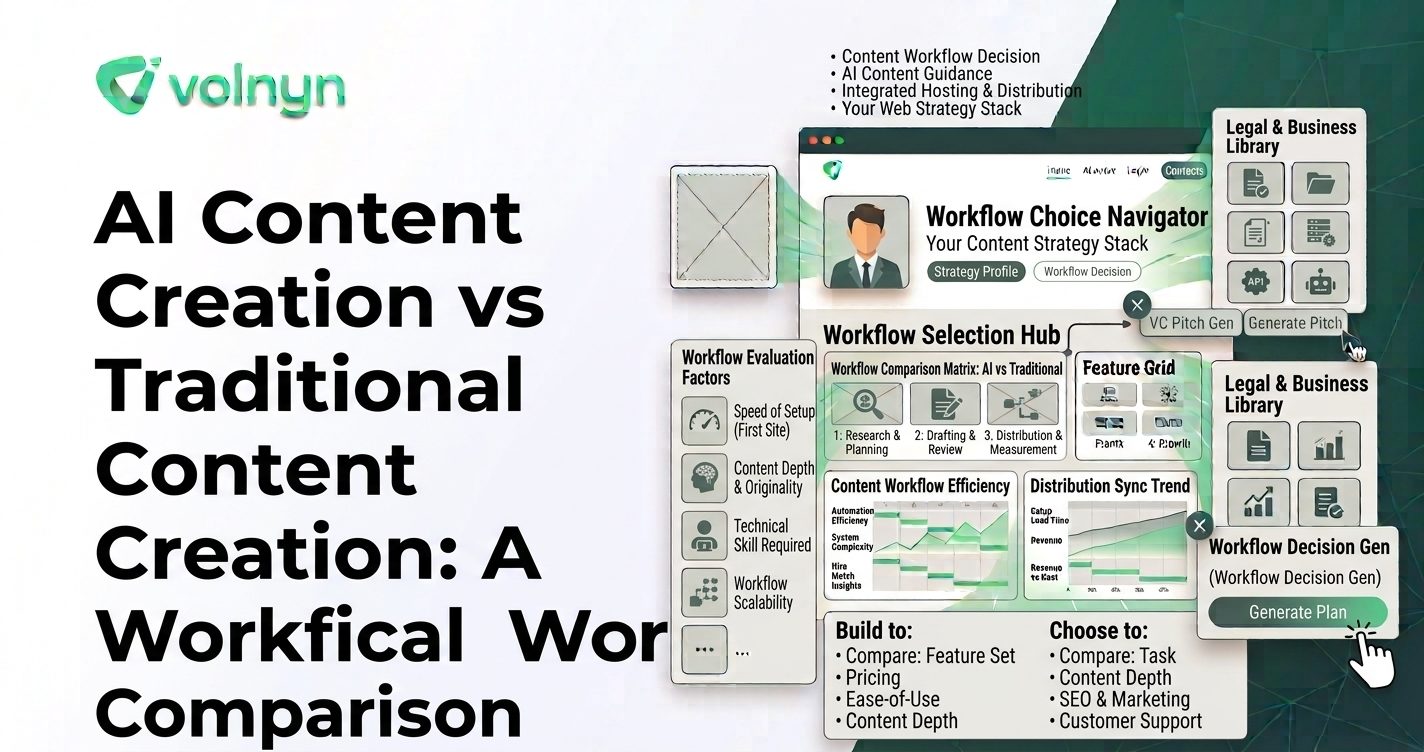
Creating a podcast traditionally can involve topic research, scripting, recording, editing, audio cleanup, publishing, and promotion. An AI podcast generator can compress several of those steps into a much shorter workflow.
That does not mean one approach automatically replaces the other. The better choice depends on what you want the podcast to accomplish. If you need a personal interview, original reporting, or a strong host identity, traditional production offers important advantages. If you want to turn an idea, article, or set of notes into a listenable episode quickly, AI can remove much of the production overhead.
AI Podcast Generator vs Traditional Podcast Production
| Factor |
AI Podcast Generator |
Traditional Production |
| Starting point |
Topic, question, notes, or existing text |
Concept, research, script, or planned conversation |
| Recording |
AI-generated narration can remove the need for a recording session |
Hosts or guests record their own voices |
| Editing |
Several production steps can be automated or avoided |
Audio is manually reviewed, edited, mixed, and polished |
| Production speed |
Designed for rapid generation and iteration |
Usually requires more preparation and production time |
| Human presence |
Can simulate a structured host conversation |
Captures real personalities, reactions, and conversations |
| Creative control |
Depends on the generator and the instructions provided |
Direct control over performance, pacing, editing, and sound |
| Best fit |
Fast explainers, repurposed content, briefings, and learning material |
Interviews, storytelling, commentary, and personality-driven shows |
How Traditional Podcast Production Works
A conventional podcast workflow usually starts before anyone presses the record button. The creator develops the concept, researches the subject, plans the episode, prepares questions or a script, and sets up the recording environment.
After recording, the production moves into post-production. Audio may need to be trimmed, cleaned, rearranged, mixed, and combined with music or other elements. Spotify's creator guidance describes podcast production as a process that spans planning, recording, editing, and publishing, while its current creator support documentation lists tools for trimming recordings, combining tracks, adding music, and working with transcripts. Spotify's podcast production guide provides an overview of these stages.
This workflow gives creators substantial control. A host can change a question during an interview, respond to an unexpected answer, pause for emphasis, or reshape the final episode during editing.
How an AI Podcast Generator Changes the Workflow
An AI podcast generator changes the starting point. Instead of preparing microphones and recording a conversation, you can begin with a topic, question, notes, or an existing article.
Volnyn's AI Podcast Generator is built around this topic-to-episode workflow. You provide a subject or source material, and it generates a two-host conversation before narrating it into a ready-to-listen episode. The resulting audio can then be played, regenerated for another angle, downloaded, and shared.
This can remove several traditional production stages. There is no requirement to write a complete script, schedule a recording session, set up a microphone, or manually edit every section before you have an initial episode.
Where AI Podcast Generation Has an Advantage
Faster Production
The biggest difference is the number of manual steps involved. A traditional episode may move through research, scripting, recording, editing, and publishing. AI can combine some of those stages into a single generation workflow.
That makes AI particularly useful when the goal is to create an informational episode rather than capture a specific person's performance.
Repurposing Existing Content
AI podcast generation can also make written content more useful. A blog post, report, research document, or set of notes can become an audio discussion instead of remaining available only as text.
For businesses and creators, this creates another way to distribute information without producing an entirely separate piece of content from scratch.
Easy Experimentation
Traditional recording makes every new version relatively expensive in time. You need to prepare, record, and edit again. With an AI workflow, changing the angle or generating another version can be much faster.
Volnyn specifically recommends using a focused topic, providing source material when available, defining the intended audience, and regenerating an episode when a different framing is needed.
Where Traditional Production Still Has an Edge
Authentic Conversations
Interviews depend on genuine interaction. A guest may tell an unexpected story, challenge the host, or introduce information that changes the direction of the discussion. Those moments are difficult to reproduce when the conversation is generated from a prompt.
Personal Voice and Performance
A host's real voice can become part of a show's identity. Delivery, humor, pauses, emotion, accents, imperfections, and spontaneous reactions can all contribute to the relationship between a podcast and its listeners.
Editorial Control
Traditional production gives the creator direct control over what is said and how it is delivered. That can be particularly important for investigative work, expert interviews, sensitive subjects, or shows where every statement needs to reflect the host's considered position.
Which Workflow Should You Choose?
The choice becomes easier when you start with the desired outcome rather than the technology.
- Choose AI generation when speed, scalability, topic exploration, or converting existing written material into audio is the priority.
- Choose traditional production when real conversations, personal storytelling, original interviews, or a distinctive host performance are central to the show.
- Use a hybrid workflow when you want human-led content but also want AI to reduce repetitive production work.
A hybrid workflow can be especially practical. A creator might research and record an original interview traditionally, then use AI tools for transcription, editing assistance, summaries, show notes, or promotional content. Spotify's current creator resources also describe transcript-based editing and AI-assisted production tools as part of modern podcast workflows. Spotify's recording and editing guidance explains several of these options.
A Practical Decision Framework
Before choosing a production method, ask five questions:
- Does the episode require a real person? If the answer is yes, traditional recording is likely an important part of the workflow.
- Do you already have source material? Articles, notes, and reports can provide a strong starting point for AI-generated audio.
- How quickly do you need the episode? Short production cycles can make AI particularly useful.
- How much control do you need? Shows with detailed creative or editorial requirements may benefit from a conventional production process.
- Can the content be reviewed before publishing? Regardless of the method, important claims and generated material should be checked before an episode goes live.
Where Volnyn Fits
Volnyn is designed for creators who want to move from an idea to a listenable podcast without building the entire conventional production pipeline. Its AI Podcast Generator can create a two-host discussion from a topic, notes, or an article, making it suitable for show episodes, article-to-audio content, internal briefings, and learning material.
Because the tool is part of Volnyn's broader AI toolkit, it can also fit into a wider content workflow rather than requiring podcast production to happen as an isolated process. The Volnyn platform includes AI tools for other content formats alongside its podcast generator.
Conclusion
AI podcast generators and traditional podcast production solve different production problems. AI can reduce the time and effort required to turn an idea or source document into an episode, while traditional production remains valuable when authentic voices, live interaction, original interviews, and detailed editorial control are the priority.
For many creators, the practical answer is not to choose one method permanently. Use traditional recording when the human performance is the content, and use AI when the production process itself is the bottleneck. A hybrid workflow can then combine original human input with faster AI-assisted production.