
Introduction
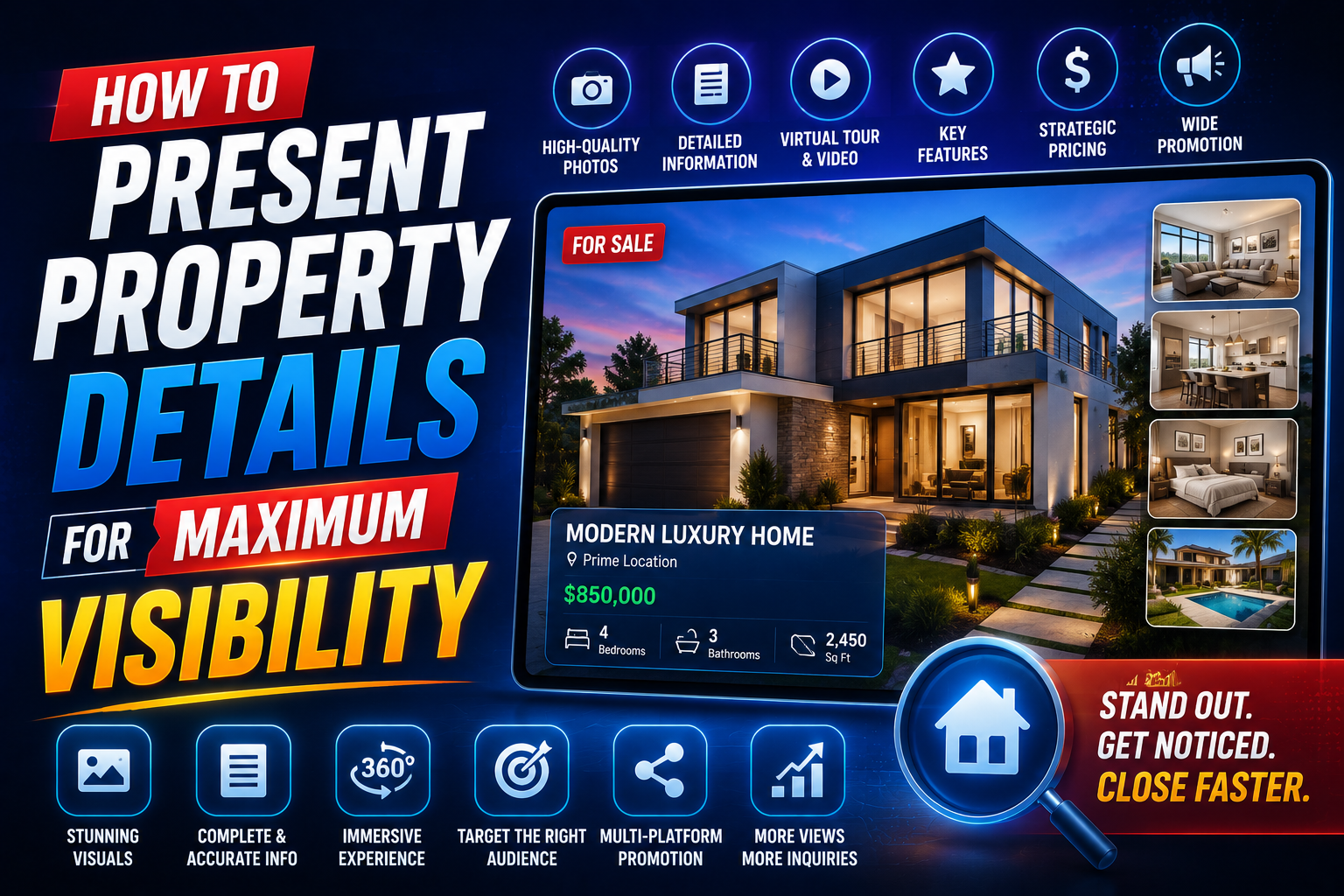
It's no longer just about uploading a few photos and a price to create a property listing. These days, people first see a property – and make their decision to buy or rent – before they reach out to a real estate agent or when they go to see it in person. The presentation of property details can make a huge difference on whether a listing is noticed or ignored.
Typically, home buyers will look at several homes in a short period. They read titles and view photos, check descriptions, and make their decision within a few seconds. This has made it all the more critical to present property information effectively and clearly.
A well presented listing allows potential buyers and renters to find out what is offered, builds confidence in the information presented, and encourages them to have an enquiry. It helps the viewer appreciate and imagine how the property might meet their needs and decrease uncertainty and confusion.
As a homeowner selling a single home, a real estate professional managing multiple homes, or a property developer presenting new opportunities, you need to be aware of the best ways to communicate the information of a property to draw in more and better-qualified interest.
This guide delves into straightforward methods for creating more compelling content about properties, making them more noticeable—and, crucially, appealing—the right reasons and to the right people.
Table of Contents
- Why Property Presentation Matters
- Start with Accurate and Complete Information
- Create Clear and Informative Property Titles
- Write Descriptions That Answer Real Questions
- Highlight Features That Matter Most
- Use High-Quality Visuals to Support the Listing
- Explain the Location and Surrounding Area
- Keep Information Organized and Easy to Read
- Maintain Transparency and Build Trust
- Review and Update Listings Regularly
- Final Thoughts
- Frequently Asked Questions
Why Property Presentation Matters
More and more people are conducting property searches online. Prior to a visit, the majority of buyers and renters review listings by reading the descriptions and specifications as well as viewing photos.
This makes listing service your initial contact with a property a very crucial moment.
An unorganized listing can lead to confusion, questions, and/or leave out vital information. An excellent property may garner limited attention when details are incomplete or difficult to understand.
Conversely, a well-crafted listing lends clarity and confidence. It enables viewers to make a quick assessment of the property's value and whether it meets their requirements.
Good presentation is not about overstatement, or push-selling. Rather, it aims to assist individuals in making informed decisions by providing accurate and meaningful information.
Use Accurate and Complete Information
Amongst the most significant parts of any property listing is accuracy.
Those who are interested in the properties are interested in concise information that makes them decide to pursue a property. When information is missing, it might cause hesitation, and when it is inaccurate, it can cause the loss of credibility.
This is a very important part of a property listing as it should clearly detail the following:
- Property type
- The location of the item is indicated by sale or rental.
- Number of bedrooms
- Number of bathrooms
- Property size
- Pricing information
- Availability status
But just putting these specs together doesn't cut it.
Care should be taken with each detail to make sure that it is consistent throughout the listing. Minor inaccuracies in measurements, prices or features can cause a lot of confusion and can dissuade potential enquiries.
Completeness is a sign of professionalism and makes viewers feel more at ease in the process of making a decision.
Develop Clean and Easy to Read Property Titles
One of the first things people will see when they're looking at listings is the property title.
A good title conveys useful information without being garbled. The emphasis is not on the sales terminology but on a precise and appealing description of the property.
The title should ensure that the identity of the property is communicated, right at the start.
When viewers are looking at a listing, stating the property type, key feature or main benefit can help them know what they are looking for prior to opening.
Clear titles also make it easier for people to navigate through listings since they can easily tell if a listing meets their needs.
Titles can be very effective in terms of information, but they tend to perform better if they are simple and informative, rather than dramatic and worthless for practical purposes.
Create Effective Descriptions That Solve Real Problems
Many real estate listings include just the key details. Although size and number of rooms is one part of it, a buyer or tenant might want to know about how a home fits into daily living.
Descriptions should take the reader on a tour of the property.
Describe the purpose of spaces rather than just saying, "This house has three bedrooms, a kitchen. Explain the general flow of the site, the natural lighting, the accessibility of public areas and anything else that could make it more comfortable and convenient.
A good property description will answer the following questions:
- What is unique about this property?
- Who would it help most?
- What is the layout of the space(s)?
- What are some benefits of it in a real sense?
The use of larger paragraphs that incorporate a conversational tone and a professional style allows readers to see themselves living in the property.
The goal is not to “oversell” but to give the context for informed decisions.
Identify Aspects That Are Most Important
Each property has unique features that need to be considered.
The difficulty is finding those features that really matter to the buyer or renter.
Location can be the best selling point for certain properties. It could be contemporary interiors, outdoor spaces, parking lots, flexibility of the workspace or security.
Instead of providing a ton of small details, tell the reader the advantages of the property's most important features.
Rather than just saying "balcony" say "more outdoor area that is ideal for relaxing or entertaining guests".
When considering the value of connecting features with real life, it seems as though the more you can do, the better informed potential buyers and renters will be.
Utilize High Quality Visuals in Support of the Listing
Photos are a critical element to making property listings stand out.
The photographs included with the property information are often the determining factor in deciding whether to continue reading or not.
A quality visual should be a true representation of the property and convey the fullness of the spaces.
Incorporate pictures that demonstrate:
- Exterior views
- Living areas
- Bedrooms
- Kitchens
- Bathrooms
- Outdoor spaces
- Unique features
It's important to be consistent, too.
Images should be well lit, properly framed and have good composition that allows for the viewer to see how spaces relate to each other.
The written description should be supported by visuals, not to replace the text.
A combination of photographs and descriptions is much more effective.
Describe the Setting and the Neighbourhood
Interiors are not the only aspect that drives people’s choice of properties.
Buyers are sometimes more influenced by the surrounding environment than the property.
A listing should give a reader an idea of what life in the area may be like a day to day basis.
Information can be useful that relates to:
- Schools
- Hospitals
- Public transportation
- Shopping areas
- Business districts
- Parks and recreational areas
Instead of giving factual information about the location, describe how it is convenient and enhances your lifestyle.
For instance, a nearby school could be attractive to families and a convenient way to commute for professionals could be via major transportation routes.
A context converts place data to value added features.
Organize Information to Be Read Easily
If information about a property is not presented well, even though it is detailed information.
Too many paragraphs of unverbalized ideas can be intimidating to a reader and inhibit interaction.
Using clear subheadings to organize information makes it easy for users to find the content they need.
The reader should be able to navigate through the listing without getting lost.
Balance is important.
Descriptions should be detailed, yet answer the question and stay on the point, and be readable.
A structured presentation shows professionalism and respects time of the reader.
Be Transparent and Foster Trust
One of the most important assets in property marketing is trust.
When it comes to big-ticket purchases, consumers value transparency and honesty.
Don't make outlandish claims or hype up characteristics.
When there are restrictions on a property, being honest about them will make a better relationship than trying to hide them.
Representations that are accurate create credibility.
If viewers believe what they read, they will be more likely to make inquiries and make appointments, and will feel more comfortable in doing so during a visit.
Professionalism can be seen in something other than flawless properties, it can be seen in reliable communication.
Regularly Update Listings – Review and Update Listings Regularly
The information on this property is subject to change.
Prices are subject to change, availability may change, renovations may take place, new pictures may emerge.
Stale content can lead to user disatisfaction and loss of trust in the content available.
Ongoing checks promote up-to-date, accurate information.
Listings can also be updated to improve descriptions, replace pictures and clarify key features.
Maintenance that is consistent is an active maintenance and a commitment to quality information.
These subtle enhancements can make a big impact in competitive property markets, enhancing visibility and engagement.
Final Thoughts
Effective presentation of property information involves making people understand a property in a clear, confident and efficient way.
Information, descriptions, visuals, organization, and communication all work together to create listings that grab attention.
The aim isn't just to get more viewers but also to link the proper viewers with the proper property with helpful and trustworthy information.
With digital platforms influencing prospective buyers and renters, the ability to convey property information effectively will always be a valuable skill for everyone in the real estate industry, including homeowners, real estate agents, and property managers.
Well-presented listings do not just inform, they allow people to visualize what they might want and make an educated decision about vital decisions.
Frequently Asked Questions
Why is it necessary to have a detailed description of the property?
Detailed descriptions can leave the buyer or renter with a good understanding of the features, layout, and suitability of the property before making enquiries or scheduling a visit.
How many photos should be in a property listing?
There's no set guideline but you should provide enough quality images to give a complete picture of the layout and features of the home you're listing.
But should property titles be in the marketing language?
Not necessarily. Titles that are clear and informative typically do better since they clearly convey the property's benefits.
What is its significance to know where it is?
Location information can assist prospective purchasers and tenants in making a judgment on convenience, accessibility and lifestyle requirements.
What is the frequency at which property should be listed?
Your list should be checked periodically for up-to-date and truthful pricing, availability, photos and descriptions.
Does simple presentation increase visibility?
Yes. Effective organisation, full information, quality visuals and professional communication can help to engage and elicit meaningful questions.