
Welcome to Volnyn
Sign in or create an account to continue
Continue with Google
or
Sign in with email
New here? Create an account
By continuing, you agree to our Terms of Service
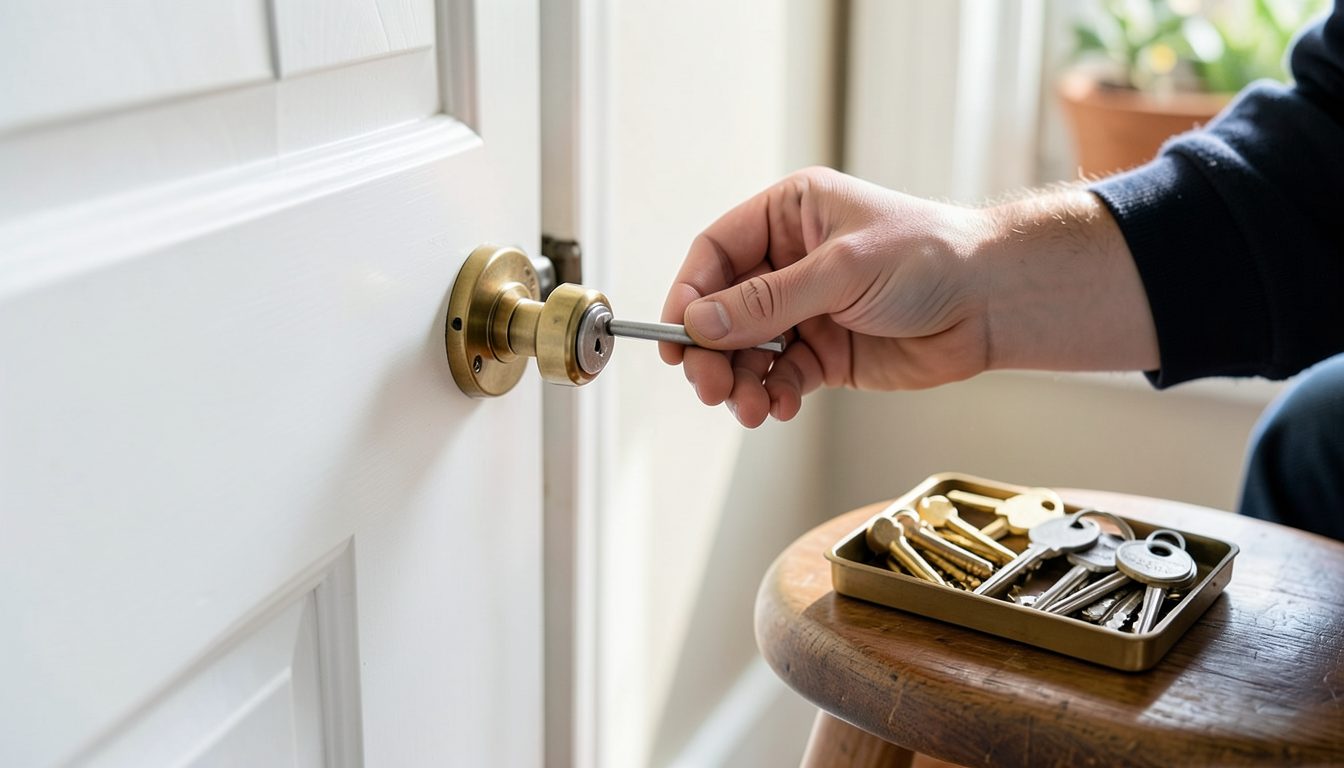
When a tenant moves out, how many keys to that unit are still out in the world? Former tenants, their friends, a dog walker, a contractor from two years ago. Most landlords cannot answer that question with confidence. Weak key control is a safety risk for your next tenant and a liability risk for you. A few simple habits close the gap.
The safest default is to rekey or change the locks, or reset the codes, between every tenancy, even if the outgoing tenant returned every key they were given. You cannot know whether copies were made. Some places require this by law, and in others it is simply good practice, so check your local rules.
Rekeying, where the pins inside the existing lock are changed so old keys no longer work, usually costs less than replacing the hardware. Some landlords learn to rekey common lock models themselves. Another option is interchangeable-core locks, which let you swap the working part of the lock in a minute without removing the whole lock.
Make the change after the final move-out and before the new tenant gets keys, and record the date in the unit file.
For every unit and shared door, track:
Have tenants sign for keys at move-in and list them again on the move-out paperwork. Label your own copies with a code rather than the address, so a lost key ring does not tell a stranger which door it opens.
Keep spare keys in a locked key cabinet or lockbox, not a kitchen drawer or a hook by the door. Limit who can open it. When you hand a key to a contractor, log it out and back in the same way you would for a tenant. For vendors who visit often, consider a separate key or code for shared areas that you can change without affecting tenants.
Electronic locks can make turnovers and vendor visits easier, but they come with tradeoffs:
| Option | Strengths | Watch for |
|---|---|---|
| Traditional keyed locks | Simple, no batteries, familiar to everyone | Copies are easy to make; rekeying needed at each turnover |
| Keypad locks | Codes change in seconds; no keys to collect | Codes get shared; batteries need replacing |
| App-connected smart locks | Temporary codes for vendors and an access history | Wi-Fi and app dependence, tenant privacy, setup effort |
If you use electronic locks, keep a mechanical backup, show tenants how to replace batteries, and be clear in the lease about what access data you can see. Some tenants are uncomfortable with locks that record when they come and go, and some places have rules about it.
Decide in advance how you will handle a tenant who is locked out. Will you come out yourself, and during what hours? Is there a fee, and does local law allow one? Will you open the door only for a person named on the lease, after checking ID? Write the policy down and share it at move-in.
Never let in anyone who is not on the lease without the tenant's written permission, even if they insist they live there. A polite refusal is far better than letting the wrong person in.
Having a key does not give you the right to use it whenever you like. Most places require notice before a landlord enters, except in emergencies, and many limit the reasons and times for entry. Follow the notice rules in your lease and local law, and give the same notice when you send a vendor in.