
Welcome to Volnyn
Sign in or create an account to continue
Continue with Google
or
Sign in with email
New here? Create an account
By continuing, you agree to our Terms of Service
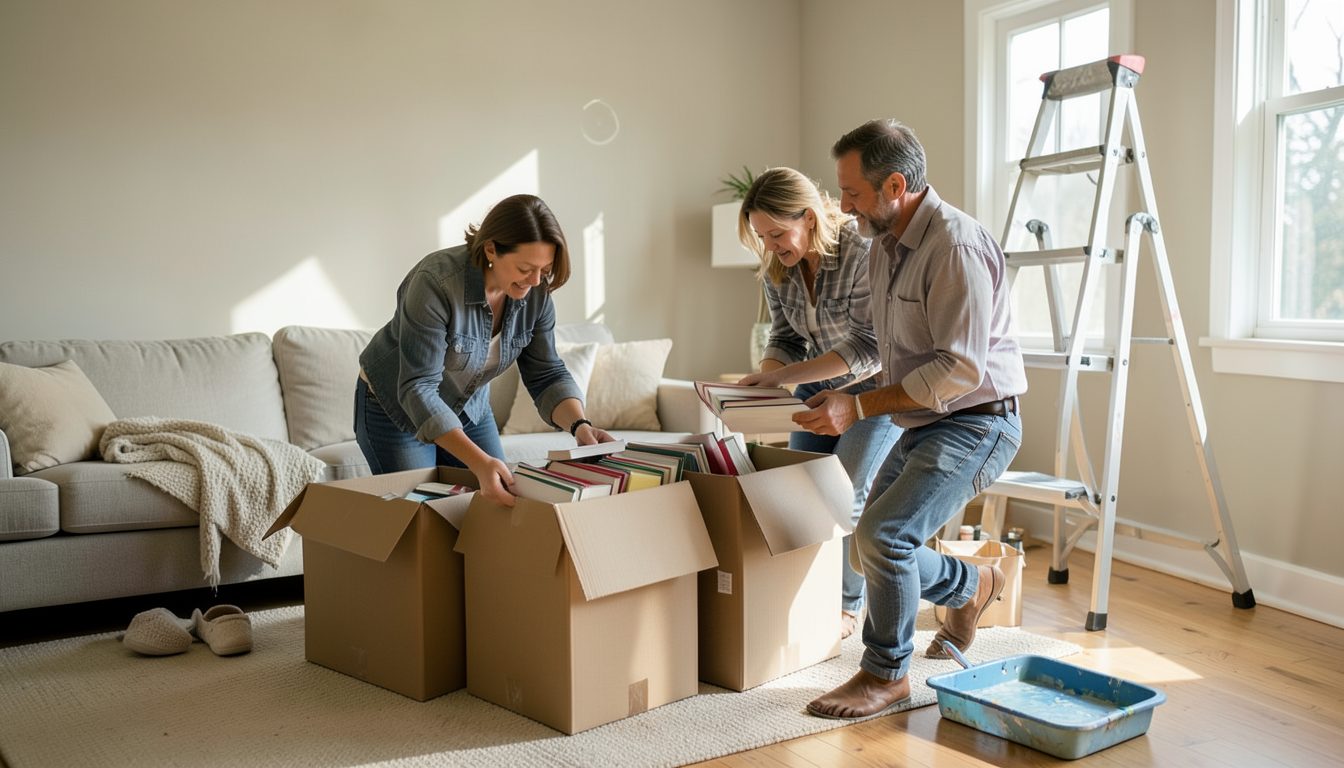
Sellers tend to fall into one of two traps when preparing a home. Some spend heavily on renovations that buyers will not pay extra for. Others list the house exactly as it is lived in, and buyers notice every scuffed wall and overflowing closet. The goal sits between the two: a home that looks clean, cared for and easy to move into, without spending money you will not get back.
Walk through the house as if you were a buyer seeing it for the first time. Start at the curb, come in the front door and move through every room, including the garage, basement and attic. Write down everything you notice: stains, sticking doors, dripping taps, dead bulbs, clutter and odors. Ask a friend who rarely visits to do the same, since you have probably stopped seeing the small problems.
If you are working with an agent, ask them to walk through too. They see what buyers in your area respond to and can tell you what matters locally.
Focus on repairs that suggest neglect, or that are likely to come up in a buyer's inspection:
Bigger issues, such as an aging roof, an old water heater or foundation concerns, are harder to judge. A pre-listing inspection can show you what a buyer's inspector is likely to find, so you can choose whether to repair, gather quotes to share or adjust the price. Disclosure requirements vary by state and country, so ask your agent or a local professional what you must disclose.
Major remodels rarely pay for themselves right before a sale, and many buyers would rather choose their own finishes. Smaller updates usually give better value:
Buyers need to picture their own lives in the space. Pack away at least a third of what sits on shelves, counters and in closets, and remove extra furniture so rooms feel open. Take down most personal photos and collections. Borrow garage space or rent a storage unit if you need to; you are moving anyway, so this is simply packing early.
Then clean as if for an inspection: windows inside and out, baseboards, light switches, the inside of the oven and fridge, grout and vents. Deal with odors at the source, whether pets, cooking or smoke, rather than covering them with air fresheners.
Staging means arranging what you already have so each room has a clear purpose. Turn a junk room back into a bedroom or an office. Arrange furniture to show walking paths and a place to sit and talk. Use matching towels in bathrooms, a plain bedspread and one or two healthy plants. Keep counters nearly empty. These steps cost little and help your listing photos as much as your showings.
The exterior is the first photo and the first impression. Mow and edge the lawn, trim shrubs, weed the beds, power-wash paths, clean or repaint the front door, replace a worn doormat and make sure the house numbers and porch light are in good shape.