
Welcome to Volnyn
Sign in or create an account to continue
Continue with Google
or
Sign in with email
New here? Create an account
By continuing, you agree to our Terms of Service
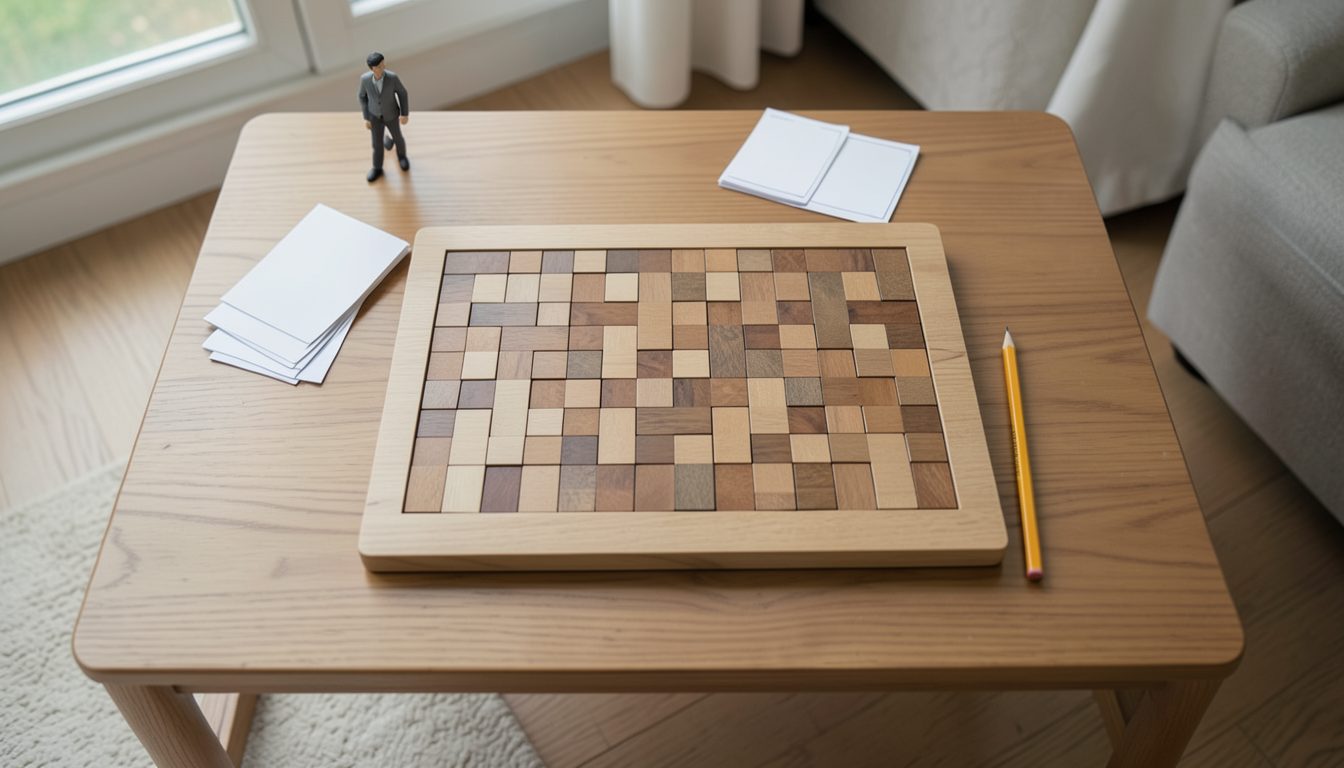
If you want to make your first browser game, picking a genre is one of the biggest decisions you will make. Some genres need huge worlds, long stories, or precise physics, and they are hard to get right in a small project. Others fit naturally into a browser tab: they load fast, explain themselves quickly, and are fun in a two-minute session. Here are four genres that suit small browser games, with what makes each one work and the traps to watch for.
Puzzle games ask the player to think rather than react. Think sliding tiles, matching pieces, connecting pipes, or arranging blocks to fit a space. They work well in the browser because they need little more than a grid, a few rules, and clear feedback when something clicks into place.
What makes them fun: a rule that is simple to learn but leads to surprising situations. The best puzzles feel obvious in hindsight.
Watch out for: puzzles that require guessing instead of reasoning, and big difficulty jumps between levels. Add an undo button and a hint option so stuck players do not quit.
In an endless runner, the character moves forward on its own and the player avoids obstacles with one or two inputs, usually jump and slide, or move left and right. The game speeds up until the player makes a mistake, then shows the score and invites another try.
What makes them fun: the "one more run" feeling. Each attempt is short, and the player always believes they can beat the last score.
Watch out for: obstacles that appear too fast to react to, and collisions that feel unfair. Make collision areas slightly smaller than the art so near misses feel like skill rather than bad luck.
Idle games are about watching numbers grow. The player clicks to earn a resource, spends it on upgrades that earn more automatically, and keeps reinvesting. They need very little art and can be enjoyed in tiny moments throughout the day.
What makes them fun: regular, visible progress and choices about what to upgrade next.
Watch out for: long stretches where nothing new happens. Introduce a new upgrade type or milestone every few minutes early on. Also be thoughtful about pulling players back constantly; a relaxing idle game should feel fine to close.
Quiz games show a question and a few answers, with points for speed or accuracy. They are the easiest genre to build and the easiest to customize, which makes them popular for classrooms, events, and small businesses.
What makes them fun: questions that are interesting even when you get them wrong, plus a short explanation after each answer.
Watch out for: questions that are too obscure, answer sets where one option is obviously correct, and long rounds. Ten questions is often plenty.
| Genre | Typical session | Controls | Hardest part to get right |
|---|---|---|---|
| Puzzle | A few minutes per level | Tap, click, or drag | Level design and a fair difficulty ramp |
| Endless runner | Under a minute per run | One or two buttons or taps | Fair obstacle timing and speed |
| Idle | Short check-ins | Clicking and menu choices | Pacing of upgrades over time |
| Quiz | Two to five minutes per round | Tap an answer | Writing good questions |
Choose the genre that matches what you enjoy and what you have time to polish. If you like writing, a quiz lets you focus on content. If you enjoy tuning feel and timing, try a runner. If you like logic, build a handful of puzzle levels. If you enjoy balancing numbers, an idle game will keep you busy.
Whatever you pick, start with the smallest playable version: one puzzle mechanic, one obstacle type, one upgrade, or five questions. Play it, share it with a friend, and grow it from there.