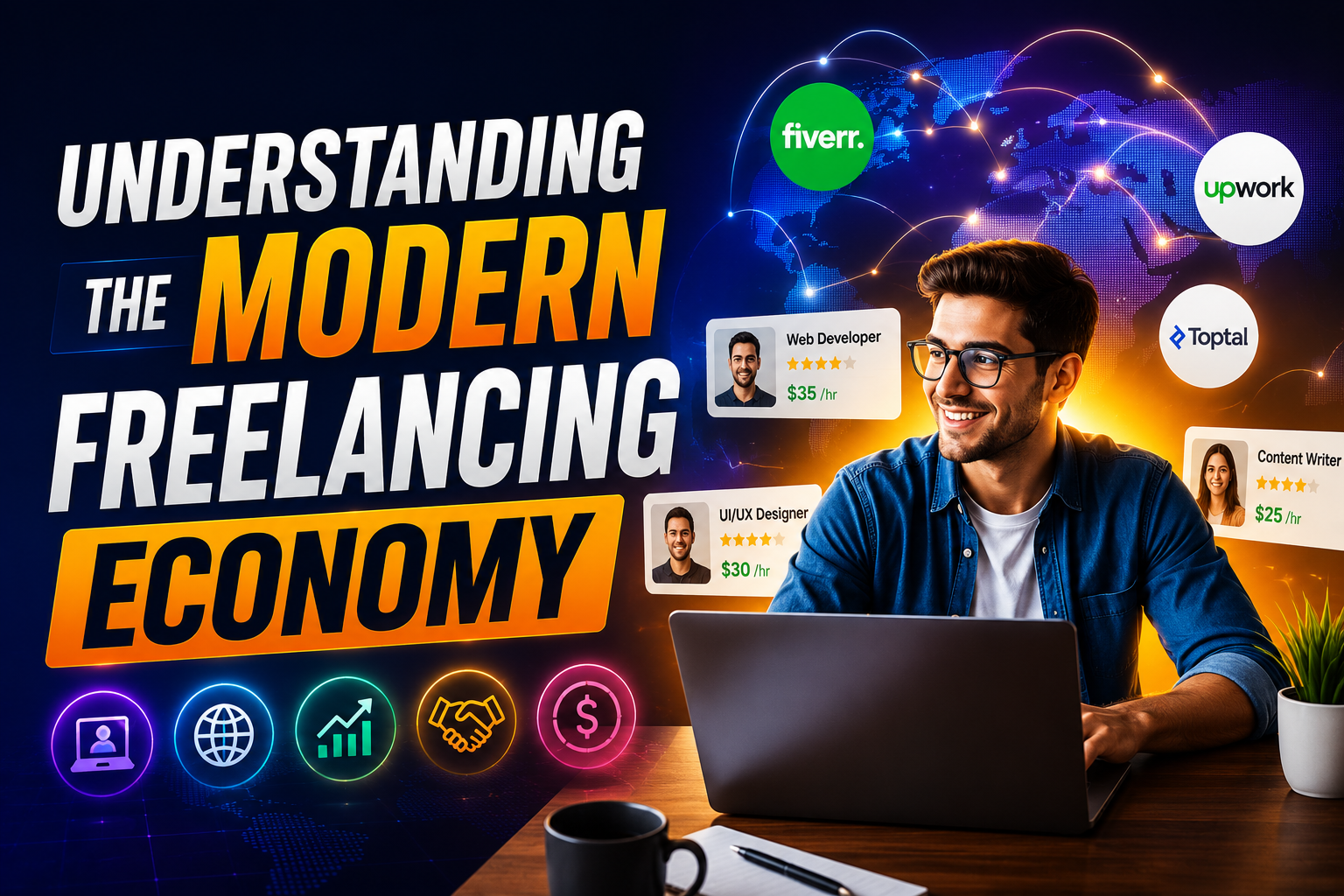
The workplace has undergone major shifts in the last 10 years. The traditional work model that involved employees working for one employer throughout the duration of their career is no longer the only way to a successful career. Technological developments, remote working and digital marketplaces have open the door to people providing their skills and services on their own.
This transition has helped to spur the development of the current freelancing economic system, an international economic system of businesses and professionals which connect straight to finish projects, resolve problems, or supply specialist services. Whether you're a graphic designer, software developer, writer, marketer, consultant, or researcher, freelancers are playing an ever more important role in helping businesses of all sizes.
Freelancing is still gradually gaining more importance in the global workforce as organizations become more flexible and project-oriented, with freelancing taking the place of a side business opportunity. In today's fast-growing freelancing economy, businesses and professionals need to navigate its ever-changing landscape with greater efficiency.
Table of Contents
What Is the Freelancing Economy?
Freelancing economy is a labor unit that is hired on a contractual basis and is not employed by a specific company. Freelancers generally are not employed by a single client and may have to work on multiple projects, contracts or services.
Freelancing differs from the traditional work dynamics in that individuals have control over their own work environment, clientele, and services. Companies, then, have access to niche skills without having to make long-term hires.
Today, there are many freelance services available in various industries and professions, including:
Digital communication tools have enabled freelancers and clients to collaborate with each other no matter where they live, and the marketplace for professional services is now more connected and accessible.
Why Freelancing Has Grown So Rapidly
A number of factors have been responsible for the growth of freelancing in the global market.
A key factor is the growth of digital technology. The era of remote work has become more feasible with the rise of high-speed internet, cloud-based collaboration and communications solutions, video conferencing and online project management software.
There has also been a growing emphasis on flexibility in business. Companies don't need to have a big in-house staff for each and every need and can hire specialists when they require expertise. This strategy can help businesses stay agile and flexible, and at the same time, manage their day to day expenses.
Meanwhile, professionals are looking to have more control of their careers. Freelance work offers a lot of flexibility – you can pick your projects, set your schedule, build a niche and clients are varied.
The need for businesses and flexibility of their workforce has fostered a climate that's encouraging freelancing to grow in industries.
Why businesses need freelance talent.Why freelance talent is beneficial for businesses.
In today's freelancing economy, there are a number of benefits for organizations looking for specific skills and know-how.
The first being the access to a wider talent pool is one of the most obvious benefits. The days of businesses having to hire personnel from within their vicinity are over. Businesses can find skilled freelancers from various locations and sectors via digital freelancing platforms.
Another advantage of freelancing is the scalability feature. They can engage extra skills when needed, whether for the growth phase, new product introduction, marketing campaigns, or special projects, without having to make permanent hires.
Other advantages may include:
- Faster project execution
- Availability of specialty skills
- Flexible resource allocation
- Reduced recruitment timelines
- Cost-effective project management
- Increased operational agility
Freelancing offers the same professional service options to startups and small businesses that might be hard to provide to a full-time employee.
Opportunities for Modern Freelancers
As freelancing has become a more common way to work, opportunities have arisen for those in all sorts of professions.
Freelancing offers flexibility in career paths, giving people the opportunity to build-up expertise in areas that are suited to their strengths and interests, as opposed to a traditional career pathway that may be linear. Over time, a freelancer can specialize in a specific niche, establish a reputation or brand, or grow into multiple areas of service.
Some of the advantages of a successful freelancer include:
Greater Flexibility
Freelancers generally have greater flexibility in their work schedule, what projects to do, and how to manage their workload. This flexibility may generate opportunities that can help achieve a better work-life balance and increase professional independence.
Diverse Project Experience
Multiclient freelancing can involve a variety of industries, business models, and problems. This variety can be a resource for continuous professional development and skill building.
Direct Client Relationships
Freelancers tend to have more direct interactions with decision makers and business owners, fostering a deeper understanding of clients' objectives and enabling freelancers to provide valuable solutions.
Potential for Career Growth
Freelancers can grow their experience, reputation, and client base, which can lead to more services offered, higher fees, and long-term professional connections.
Freelance websites have become an integral part of the modern freelance economy. These sites enable businesses to connect with professionals and offer communication, project management, service discovery and collaboration systems.
Rather than depending on personal contacts or normal recruitment methods, companies can browse service listings, check portfolios, do some comparison of skills, and seek out professionals that are suited to their project needs.
Likewise, freelancers can demonstrate their expertise, show their past projects, and attract clients looking for services in their niche.
These interactions can be enhanced by using platforms like the Volnyn Freelancing Marketplace, which facilitates better communication between service providers and clients.
Typical freelancing platforms are:
With the rising popularity of freelancing, these platforms are becoming crucial in providing prospects for professional chances and business collaborations.
Freelancing is a great way to build your creative career; however, it presents a set of difficulties.
Freelancing can be a great opportunity but also a challenge that freelancers and clients need to be aware of.
Establishing a regular work cycle as a freelancer isn't necessarily easy. Project availability is not guaranteed and can vary in line with the market need, client requirements and the working environment.
Common challenges include:
- Developing a solid customer base
- Managing several projects at once.
- Establishing competitive pricing
- Maintaining consistent income
- Keeping up with market shifts.Adjusting to market trends.
Employers can also struggle with the recruitment of freelancers, including assessing their abilities, communication, and coordinating project expectations.
Good relationships between freelance and client can be made up of : clear communication, clear goals, realistic timelines, and shared responsibility.
Learn how to work successfully as a freelancer.How to have a sustainable freelance career.
If you want to be successful as a freelancer, it's more than just the technical skills that you need.
Those who excel as freelancers tend to prioritize aspects like client satisfaction, quality control, and trust. Repeated business and referrals are a big part that reputation plays.
Important practices are:
- Performing work regularly and competently
- Effective inter-collaborative communication during projects.
- Meeting agreed deadlines
- A good portfolio is essential to a successful career.
- Continuously improving skills
- Understanding client objectives
When freelancers treat their work as a business instead of just a series of projects, they're better equipped to grow on a sustainable basis.
By the same token, companies that cultivate successful freelance partnerships often find they gain access to niche skills on a long-term basis.
This will be a discussion about the future of freelancing.
As technology and remote work become more advanced, and as new business models emerge, the freelancing economy will continue to evolve.
The influence of AI, automation, and digital collaboration tools on freelancer work practices and project management is expected.AI, automation and digital collaboration tools are likely to shape freelancer working practices and project management. Routine tasks might become more automated, but a demand for specialized knowledge, creativity, strategic thinking, and human expertise is likely to persist.
There are a few trends that are anticipated to influence the future of freelancing:
- Increased remote collaboration
- More specialization of professionals.
- Multinational workforce networks.More worldwide talent networks.
- Stronger digital marketplaces
- Enhanced workflows with AI assistance.Enhanced workflows with increased use of AI-assisted workflows.
- The increased need for knowledge in projects.The increasing need of project based knowledge.
Technological advances can complement freelance workers, not replace them, and offer additional avenues for the professional to build important skills.
Final Thoughts
The contemporary freelancing economy has revolutionized the method which companies find talent and by way of which employees form their careers. Previously, part-time employment was regarded as a less common option, but in recent years it has become a regular and expanding pattern of employment worldwide.
Freelancing provides businesses with specialized skills, flexibility, and resources that can be scaled up or down as needed. It offers opportunities for independence, career growth and working in a variety of industries and clients for professionals.
With online collaborative tools, digital platforms, and online marketplaces constantly changing, freelancing is likely to play a large role in the economy as a whole. The knowledge of the opportunities, challenges, and future trends of this revolution in work can equip businesses and freelancers alike to better prepare for the future.
Frequently Asked Questions
What do you mean by the freelancing economy?
Freelancing economy is a employment system in which people do a task on their own without being an employee of any particular business.
What is driving the increased popularity of freelancing?
The technology, telecommunication options and digital marketplaces have enabled businesses and freelancers to operate together more conveniently, regardless of location.
What are some of the services freelancers provide?
Freelancers often render web design and development, marketing and design, writing, customer support, research, consulting, and other services.
What are the advantages of outsourcing to freelancers?
Access to expertise, flexibility in staffing and scale of resources without long-term commitments.
Is freelance something that can be done professionally?
Yes. Professionals can create a successful freelancing career by gaining experience, cultivating great client relationships, and continually upgrading their skills.
What are the benefits of freelancing platforms for freelancers and clients?
Freelancing websites offer a structured platform that allows clients to find freelancers, compare services, manage projects, and work more efficiently.