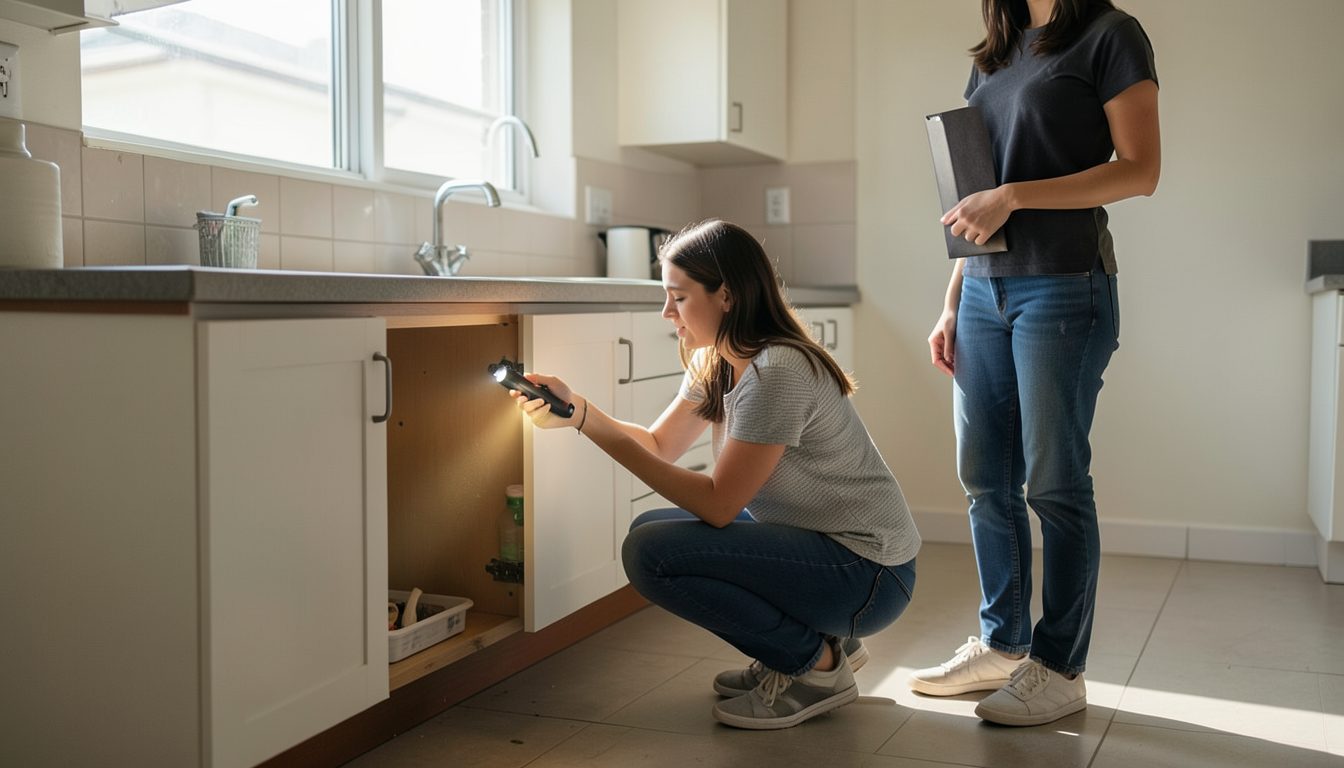
Once you sign a lease and hand over a deposit, your bargaining power drops sharply. Problems you didn't notice at the viewing become yours to live with, and vague terms rarely work out in your favor. A careful hour before signing can save months of frustration. Here is what to check, in roughly the order you'll need it.
Make sure the listing and the landlord are real
Rental scams are common, especially where demand is high. Before sending any money:
- See the inside of the home in person, or on a live video call, not just in photos.
- Be wary if the rent is far below similar homes nearby, or if the person can't show you the property but wants a deposit to "hold" it.
- Confirm the person you're dealing with owns the property or is authorized to rent it. Ask for the owner's or management company's name and check it independently where public records or agent registers allow.
- Never pay by gift card, cryptocurrency or wire transfer to someone you haven't verified. Use a payment method that leaves a record.
Inspect the home with fresh eyes
At a viewing it's easy to focus on the light and the layout. Take a slower second look before you commit:
- Water: run the taps and shower, check the pressure and how long hot water takes, flush the toilet and look under sinks for leaks or stains.
- Damp and mold: check corners, window frames, bathroom ceilings and behind furniture. A musty smell is a clue.
- Heating and cooling: ask what type it is, test it if you can, and ask what it usually costs to run.
- Windows and doors: do they open, close and lock properly?
- Power and signal: enough outlets where you need them, and phone signal in the main rooms.
- Safety: working smoke alarms, and carbon monoxide alarms where there are gas or fuel-burning appliances.
- Pests: droppings, traps or bait in cupboards deserve a question.
If you can, visit the street at a different time of day, such as a weekday evening, to get a feel for noise, parking and the walk from public transport.
Understand the full monthly cost
The rent is only part of what you'll pay. Ask for a clear answer on each of these:
- Which utilities are included, and which you set up and pay yourself.
- Any building, service, parking, storage or pet charges.
- The deposit amount, where it will be held and the conditions for getting it back.
- Any fees for applications, renewals, late payment or ending the lease early.
- How and when the rent can be increased.
Read the lease itself, every page
Ask for the lease in advance so you can read it without someone waiting for your signature. Look for:
- The start date, the length of the term and what happens at the end: does it renew automatically, and how much notice must each side give?
- Who is responsible for which repairs, and how you should report them.
- Rules on guests, pets, subletting, smoking, decorating and working from home.
- When and how the landlord can enter the home.
- The conditions and costs of breaking the lease early.
Some clauses may not be enforceable where you live, because many tenant protections are set by local law. If something looks unusual, a local tenants' advice service or legal clinic can tell you what applies in your area.
Get promises in writing
If the landlord says they'll repaint, fix the oven or remove old furniture before you move in, ask for it to be written into the lease or confirmed by email with a date. Spoken promises are hard to rely on later.
On move-in day, record the condition of the home with dated photos and a short written list, and send a copy to the landlord. It is your best protection when the deposit comes back.
Before you sign
- Landlord and listing checked
- Home inspected and problems noted
- Full monthly cost known
- Lease read in full and questions answered
- Promises written down
- A copy of the signed lease kept somewhere safe