
Welcome to Volnyn
Sign in or create an account to continue
Continue with Google
or
Sign in with email
New here? Create an account
By continuing, you agree to our Terms of Service
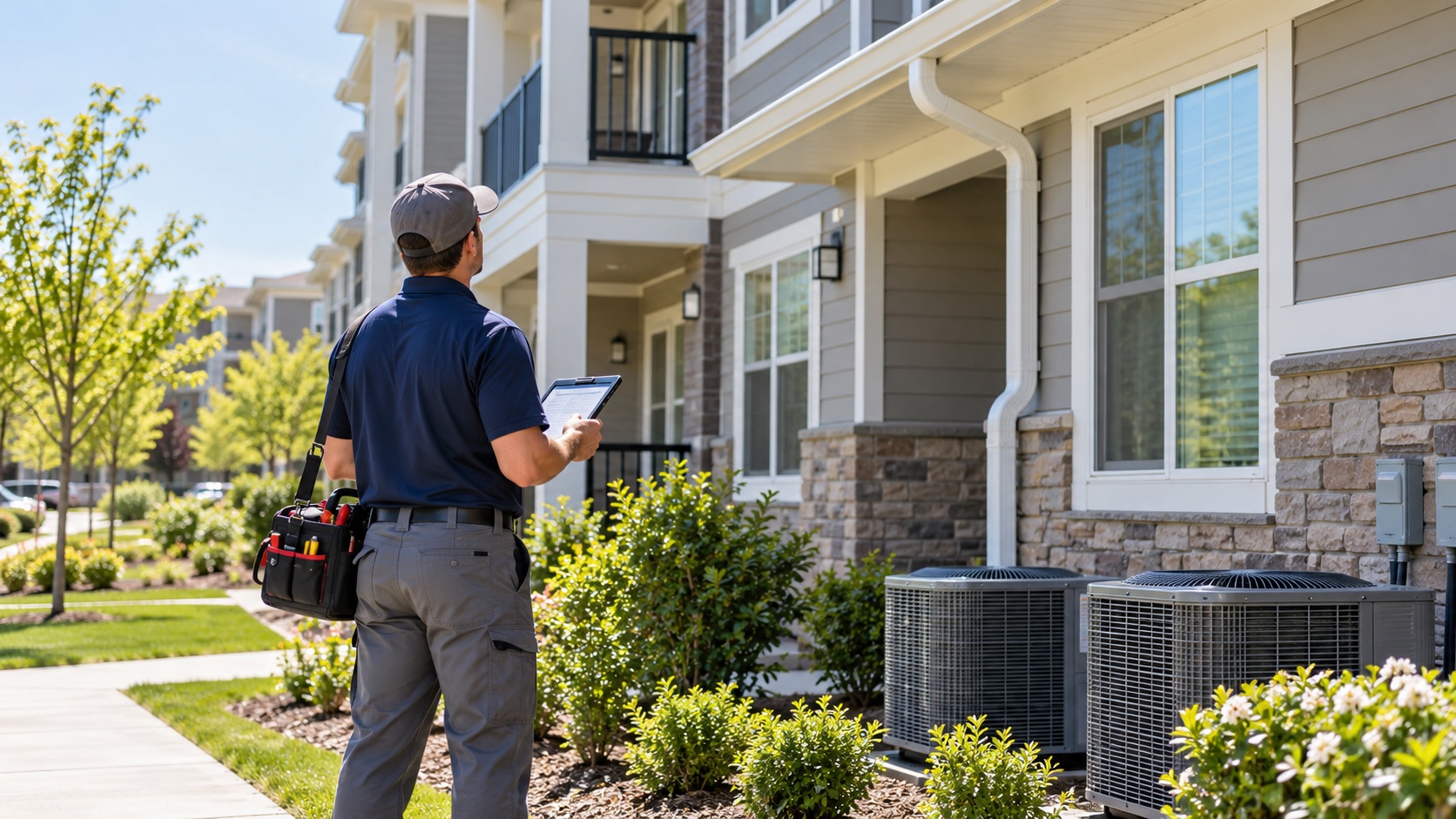
Preventive maintenance is easier to schedule, easier to budget, and less disruptive than emergency work. A seasonal plan gives property teams a repeatable rhythm while making sure small warning signs are documented before they become expensive failures.
Replace common-area filters, clean condenser areas, verify condensate drains, and review unusually high water use. Check pools and other seasonal amenities on a documented schedule. Heat also exposes failing seals, so inspect windows and doors where residents report comfort problems.
Protect exposed pipes, inspect mechanical rooms, document freeze-risk units, and keep emergency contacts current. After severe weather, record exterior conditions with dated photos even if no immediate damage is visible.
Test life-safety equipment according to local requirements, inspect entrances and trip hazards, review pest-control reports, verify emergency access, and check open work orders for repeated symptoms. A second request for the same leak or outlet is a signal to investigate the cause rather than repeat the patch.
Store inspection notes, photos, vendor invoices, warranties, and follow-up dates together. A checklist only creates value when someone can prove what was checked, what was found, and what happened next.