Turning a single still photo into a moving video clip is one of the more genuinely useful AI capabilities to come out of this category — a product photo that gently rotates, a portrait that subtly comes to life, a real estate photo with slow camera drift. It's a different technical process than generating video from a text prompt alone, and understanding that difference will get you a noticeably better result.
How Image-to-Video AI Actually Works
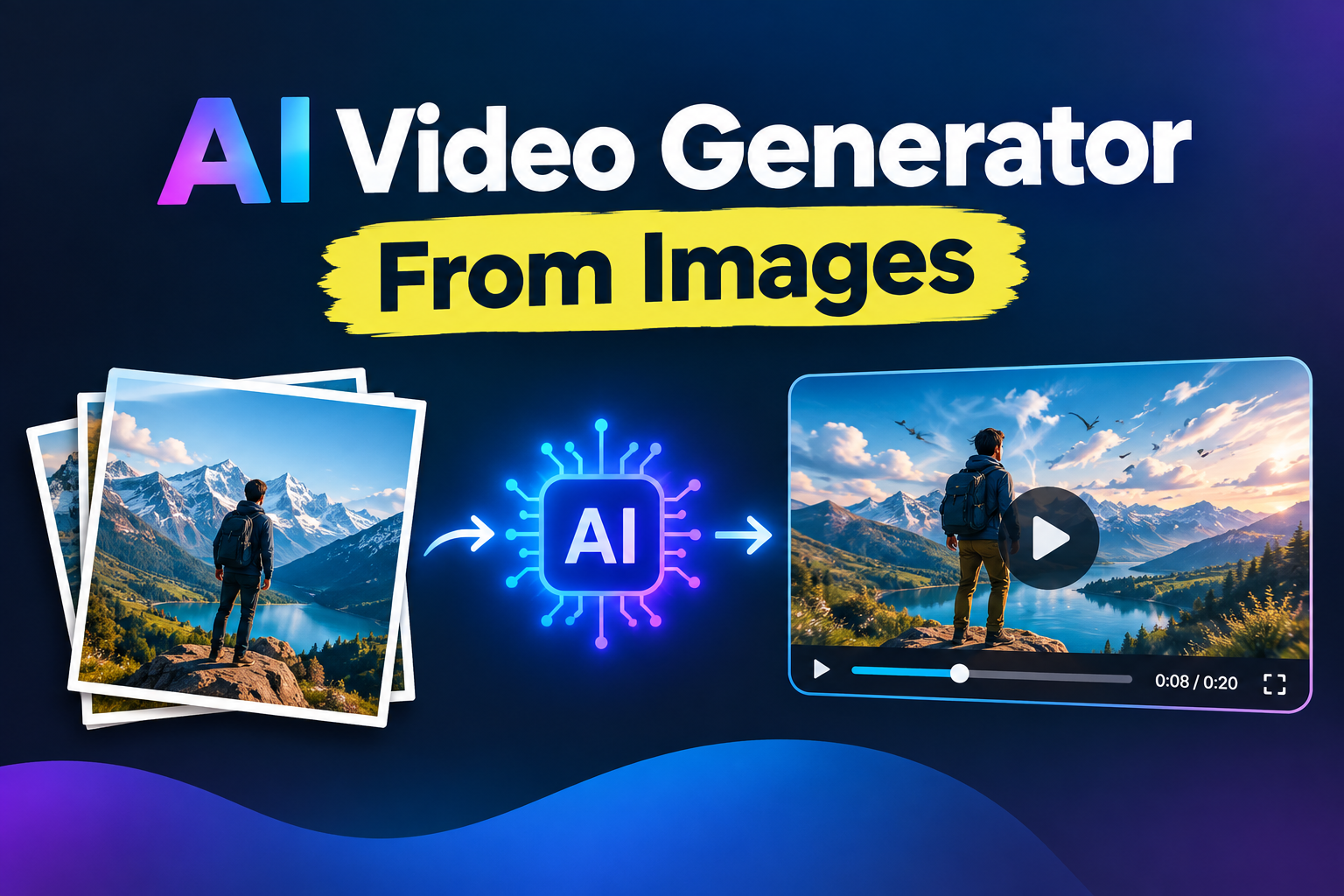
Unlike pure text-to-video generation, image-to-video AI starts with a fixed reference — your uploaded photo — and generates motion around it rather than inventing the scene from scratch.
You upload a source image rather than describing a scene from nothing.
You optionally add a text prompt describing the motion you want ("slow zoom in," "gentle wind moving hair," "camera pans left").
The model analyzes the image's depth and structure, identifying what should move (a person, an object, background elements) and what should stay anchored.
It generates frames that animate outward from that starting image, keeping the original subject recognizable while adding believable motion.
You get a short clip — typically 3–10 seconds — that begins from your exact photo rather than a generated approximation of it.
This is why image-to-video results tend to look more "grounded" than pure text-to-video: the model isn't guessing what your subject looks like, it's working directly from a real photo you provided.
Best Tools for Turning an Image Into a Video
Runway offers dedicated image-to-video generation with strong motion control, letting you guide specific elements of the frame (a motion brush lets you paint which areas should move and how).
Kling handles image-to-video with particularly strong results on human subjects — natural-looking movement in portraits and figures is one of its stronger points.
Luma Dream Machine performs well specifically on scenes with depth and spatial elements — a photo of a room or landscape tends to animate with convincing perspective shift.
Canva has built image-to-video generation directly into its existing design platform, useful if you're already working with Canva for other content and want to animate an image without switching tools.
Pika leans toward stylized, social-ready output rather than strict photorealism, which suits quick, eye-catching social clips over precise product work.
What This Is Actually Good For
Product photography — a static product shot animated with a slow rotation or subtle zoom, useful for e-commerce listings or ads without a full video shoot.
Real estate — turning still listing photos into short clips with gentle camera movement, adding polish to a listing without hiring a videographer.
Portrait animation — bringing a headshot or portrait to life with subtle, natural movement for profile content or creative projects.
Archival or historical photos — adding motion to old photographs for documentary-style or nostalgic content.
Social content from existing photo libraries — repurposing a photo you already have into short-form video content without new production.
Getting a Better Result: Practical Tips
Start with a high-resolution, well-lit source image. The model works from what's actually in your photo — noise, blur, or poor lighting carries directly into the animated result.
Describe the motion specifically, not just the outcome. "Camera slowly zooms into the product" gives the model clearer direction than "make it look cool."
Keep the motion request realistic for the image. A close-up product shot suits a subtle zoom or rotation; asking for dramatic camera movement on a flat, front-facing photo can produce distorted results.
Expect to regenerate at least once. Image-to-video results vary more than people expect on the first try — a second attempt with a refined motion description often fixes awkward movement.
Add audio separately if your tool doesn't generate it natively. Most image-to-video tools output silent clips by default; music or narration is typically layered on afterward in a basic editor.
A Note on Volnyn
Volnyn's AI video generator works from text prompts, not uploaded images — you describe a scene in plain language, and it generates a matching clip from scratch, rather than animating a photo you already have. If animating an existing image specifically is what you need, one of the dedicated image-to-video tools above (Runway, Kling, Luma, Canva) is the right fit. If your project works fine starting from a written description instead of a specific photo — social clips, ad creative, general B-roll — Volnyn's is a simpler starting point with free, commercially-usable output.
Common Mistakes
Uploading a low-quality source image and expecting a polished result. The output quality ceiling is set by your input image, not just the AI model.
Requesting motion the photo's composition can't support. A flat, straight-on photo asked to "pan dramatically" often produces warping rather than a clean camera move.
Assuming every tool handles audio the same way. Check whether your tool generates sound natively or expects you to add it separately before planning your workflow.
Not checking commercial usage terms before publishing. This varies by platform — confirm before using an animated product photo in paid advertising or client work.
FAQ
What's the difference between image-to-video and text-to-video AI?
Image-to-video starts from an actual photo you upload and animates around it, keeping the original subject recognizable. Text-to-video generates the entire scene from a written description with no reference image at all.
Can I animate any photo, or does it need to meet certain requirements?
Most tools work best with high-resolution, well-lit images with a clear subject. Blurry, low-resolution, or poorly composed source photos tend to produce weaker, more distorted results.
Do image-to-video tools add sound automatically?
Most produce silent video by default. You typically add music, sound effects, or narration afterward in a separate editing step, unless your specific tool advertises native audio generation.
How long can an image-to-video clip be?
Most tools cap individual generations at roughly 3–10 seconds, similar to the length limits on text-to-video generation.
Which tool is best for animating a product photo specifically?
Runway's motion brush gives the most precise control over which parts of a product image move, which is useful for subtle, professional-looking product animation.
Does Volnyn support turning a photo into a video?
Not currently — Volnyn generates video from a text description rather than an uploaded image. For image-to-video specifically, a dedicated tool like Runway, Kling, or Canva is the better fit.

Be the first to leave a comment.