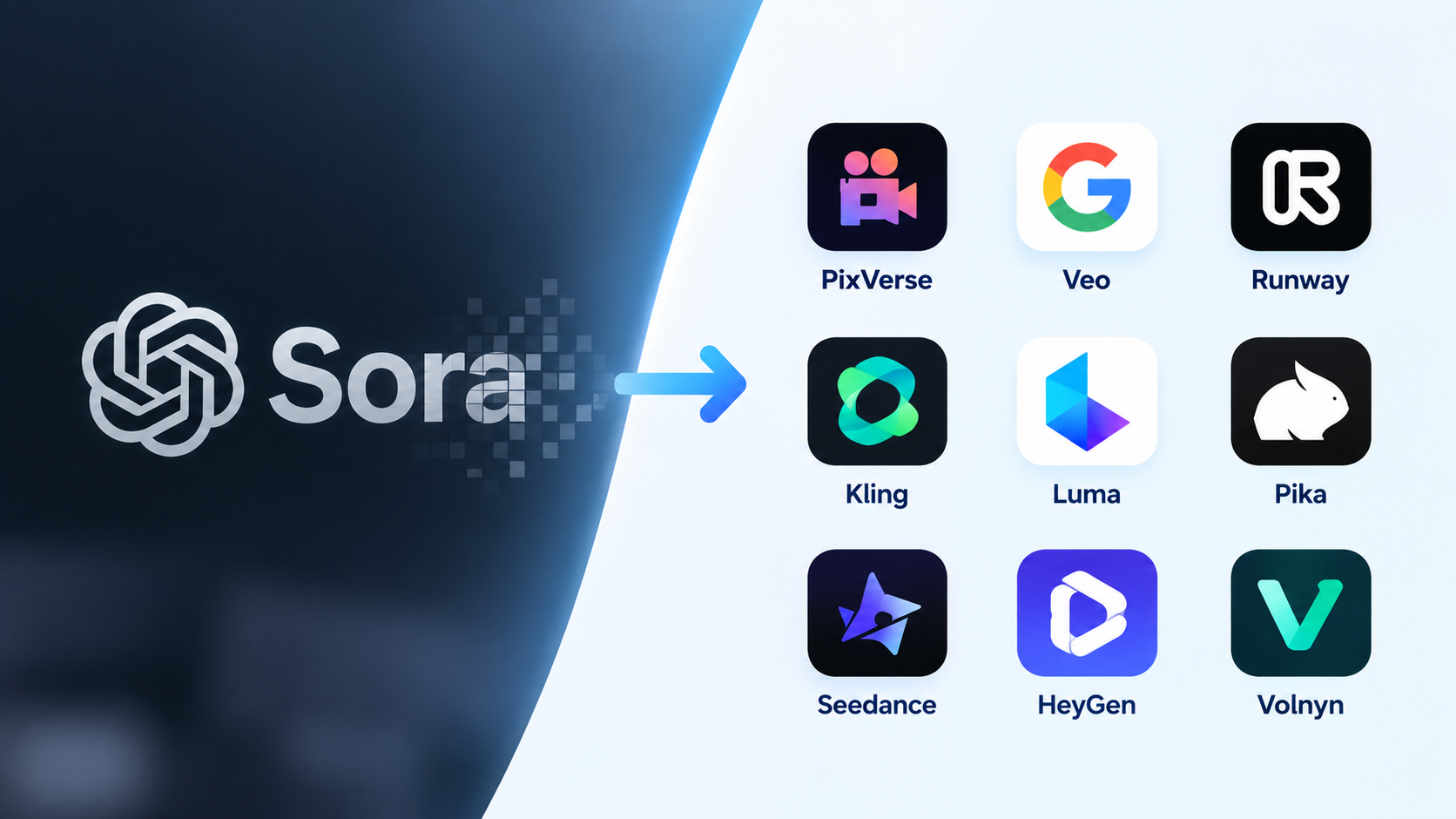
OpenAI shut down Sora. If you built any part of your workflow around it, here's the short version: the app and web experience ended in April 2026, and the API — the part developers and automated pipelines relied on — is being switched off on September 24, 2026. If you're reading this close to that date, this is not a "someday" problem.
The good news is that Sora was never the only text-to-video option, and the field has moved fast in the months since. Below is an honest look at what's actually filling the gap, organized by what each tool is genuinely good at rather than a single "best overall" crown.
Why People Are Suddenly Searching for "Sora Alternatives"
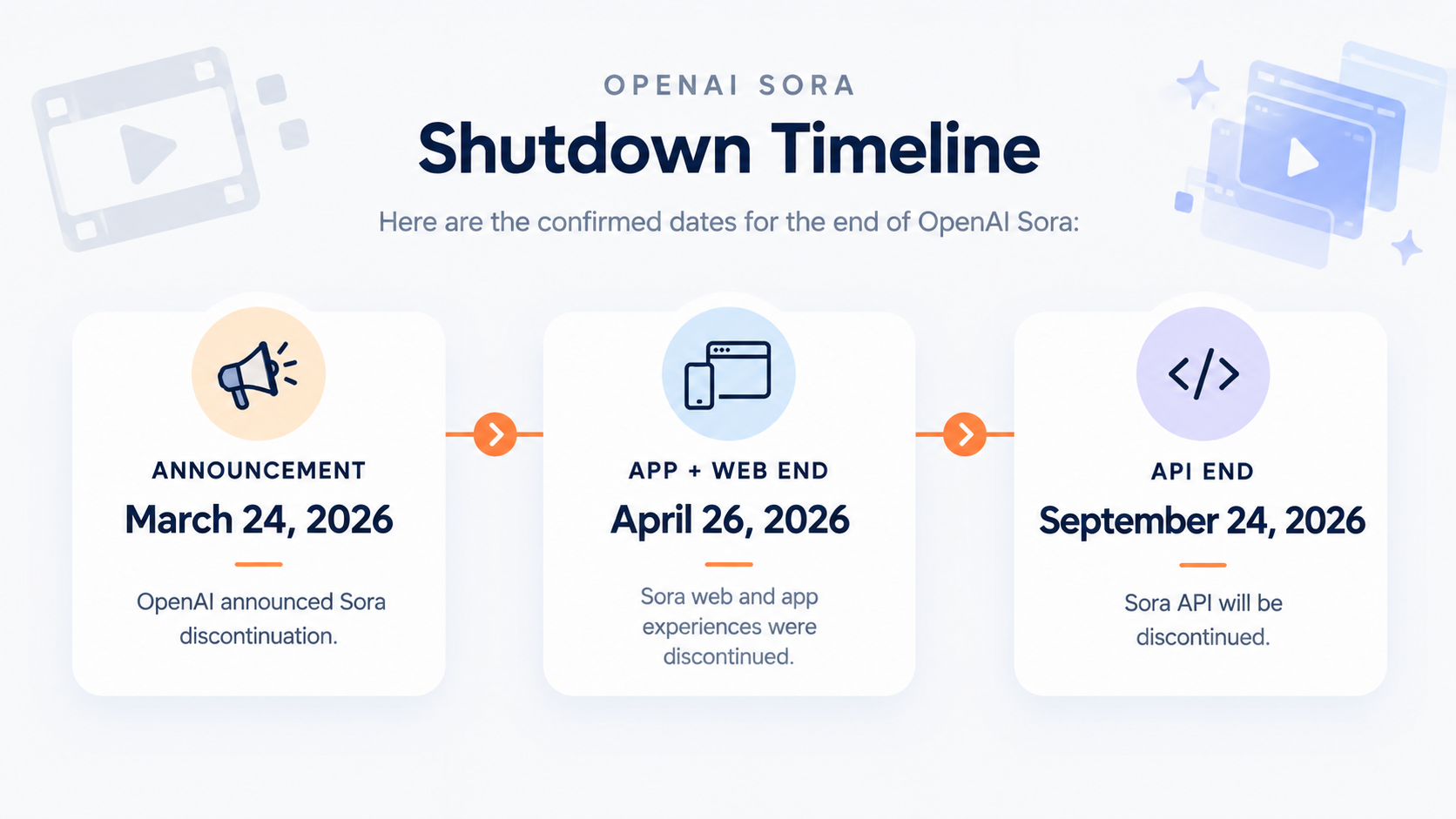
OpenAI announced Sora's discontinuation on March 24, 2026, then shut down the web and mobile app on April 26, 2026, with the API following on September 24, 2026 (source: Engadget). Coverage at the time noted that interest in the app had cooled sharply after its initial App Store spike, with month-over-month declines in installs and spending, and that the move lined up with OpenAI's broader shift toward enterprise and coding-focused products. A high-profile Disney content partnership tied to Sora was also dropped as part of the shutdown.
For anyone with existing Sora projects, OpenAI's own guidance was to export generated content before the app shutdown — so if you haven't already, that's step one, separate from picking a new tool.
What to Look for in a Replacement
Not every "Sora alternative" solves the same problem. Before comparing tools, get clear on:
What you're actually making — short social clips, ad concepts, product demos, B-roll, or long-form narrative video all favor different tools.
Commercial usage rights — confirm you can use output commercially without attribution or per-use fees before you build a workflow around a tool.
Standalone vs. bundled — a dedicated video model gives more control over cinematography and physics; a bundled tool inside a broader content workspace trades some of that control for speed and fewer subscriptions.
Cost at your actual volume — free tiers are usually credit-limited; check what a realistic month of output costs before committing.
Learning curve — some tools reward detailed, technical prompting; others are built for one-line descriptions.
AI Video Generators Like Sora, Compared
PixVerse is frequently cited in 2026 buyer guides as a strong all-around pick, with reviewers testing it for physics accuracy, temporal stability, native audio, and general workflow fit against dozens of other models. It's a reasonable starting point if you want one general-purpose tool with a usable free tier.
Google Veo (3.1) shows up repeatedly as the pick for realistic, marketing-oriented footage — the kind of clean, believable output brands want for ads and YouTube content.
Runway (Gen-4.5) is positioned by testers as the choice for filmmakers who want hands-on camera and shot control, rather than a one-shot "describe and generate" experience.
Kling (3.0) is called out specifically for high-motion, action-heavy scenes where other models tend to break down.
Luma (Ray 3.2 / Dream Machine) — Luma's own team frames its platform as a primary destination for teams moving off Sora, with a focus on cinematic texture for brand films and pre-visualization work.
Pika trades cinematic control for speed and social-native output. It offers text-to-video and image-to-video from a single prompt, plus "Extend" and "Stylize" tools and community style presets, and its pricing runs free (limited monthly credits) up through paid tiers with more generation volume — good for Reels/Shorts/TikTok, less suited to long-form or highly controlled scenes.
Seedance 2.0 (via Dreamina) takes a different technical approach: it generates audio and video together in a single pass and maintains character and scene consistency across multiple shots from one prompt, which matters if you need the same character to appear consistently across a short sequence rather than isolated clips.
HeyGen and Synthesia aren't general video generators at all — they're built specifically for talking-avatar and training/explainer video, and are worth knowing about if your actual need is presenter-style content rather than cinematic B-roll.
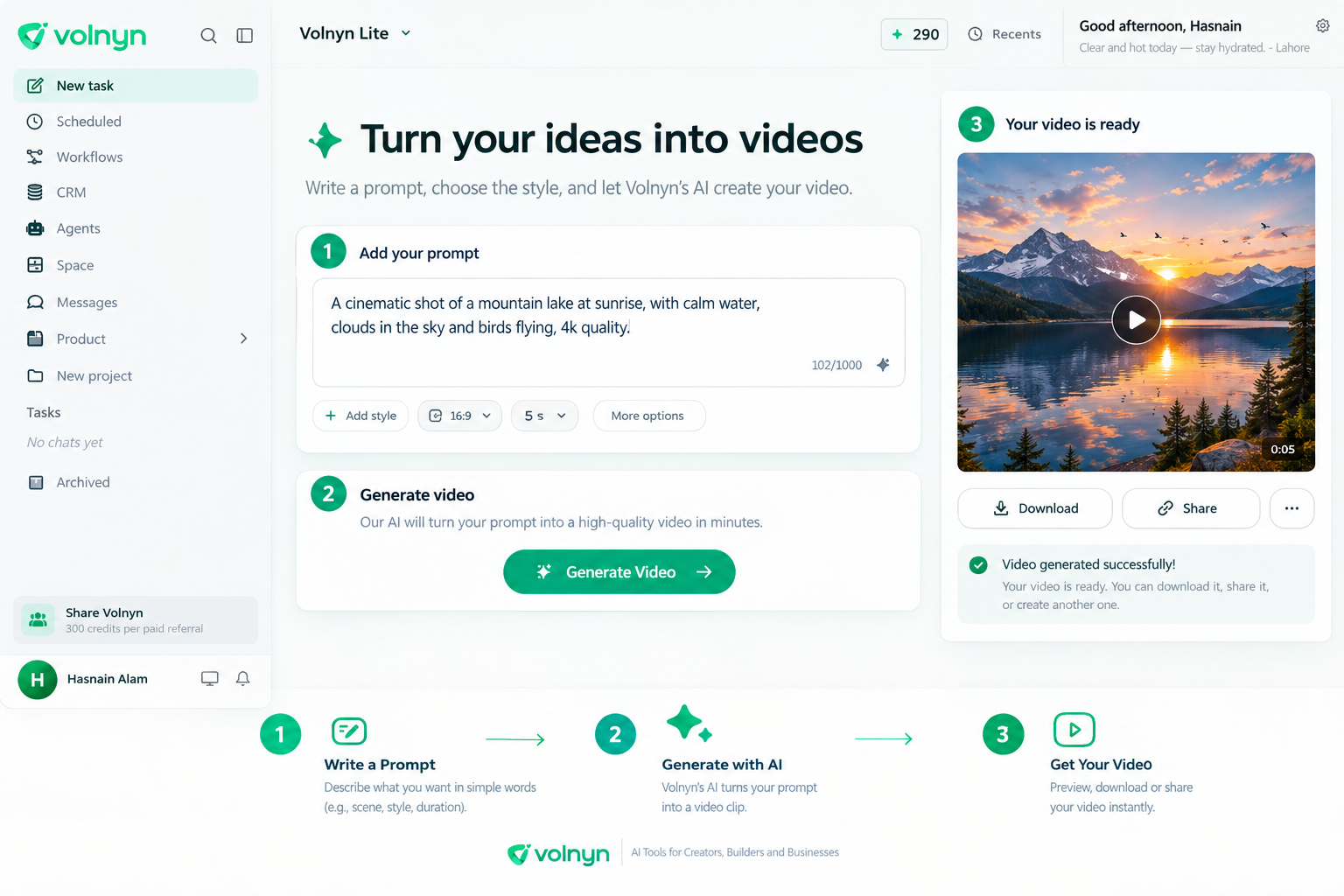
Volnyn's AI video generator is a different kind of option: it's not trying to out-cinematography a dedicated video model. It's a text-to-video generator built into a broader all-in-one AI workspace that also does images, music, podcasts, presentations, and full website building from one account. You describe a scene, generate, preview, and download — free to start, no credit card required, and everything you generate is yours to use commercially with no attribution or per-use fees. If your actual need is occasional social clips, ad concepts, or B-roll rather than a dedicated video production pipeline, that bundling can mean one subscription instead of three.
Which One Should You Actually Use?
If cinematic control and physical realism are non-negotiable, a dedicated model — Veo, Runway, or Kling depending on the shot type — is worth the steeper learning curve. If you're prioritizing speed for social content, Pika's preset-driven workflow is built for that. If you need the same character consistent across a short sequence, Seedance's joint audio-video approach is the more specific fit. If you're a solo creator, freelancer, or small business that needs video alongside images, music, and a website — and doesn't want to manage several vendor accounts for one campaign — a bundled tool like Volnyn is the more practical starting point, even if it's not chasing the same raw output ceiling as the specialist models.
Limitations to Keep in Mind
No tool here fully replicates what Sora was aiming for, and that's worth saying plainly: physics accuracy, shot length, and prompt-following consistency still vary a lot between models, including Volnyn's. If you need frame-accurate camera moves or multi-minute narrative sequences, expect to still do manual editing work on top of any AI-generated output, regardless of which tool you pick.
FAQs
Why did OpenAI shut down Sora? OpenAI didn't give a detailed public reason beyond a strategic shift toward enterprise and research priorities (including robotics), alongside reported declines in app engagement after its initial launch spike.
Is there a free alternative to Sora? Several tools above — including Pika and Volnyn — offer a usable free tier with limited monthly generations, so you can test fit before paying.
Can I still access my old Sora videos? OpenAI advised exporting content before the app shutdown on April 26, 2026. If you haven't downloaded your clips, check OpenAI's help center directly for current guidance, since access details can change.
Do I need video editing skills to use these tools? No — all the tools covered here, including Volnyn's, work from a plain-language text prompt. You'll still want basic editing skills if you're stitching multiple clips into a longer piece.
Next Step
If your use case is occasional, campaign-driven video — not a dedicated production pipeline — try Volnyn's AI video generator free, and use the same account for image and music generation when a project needs more than just video.