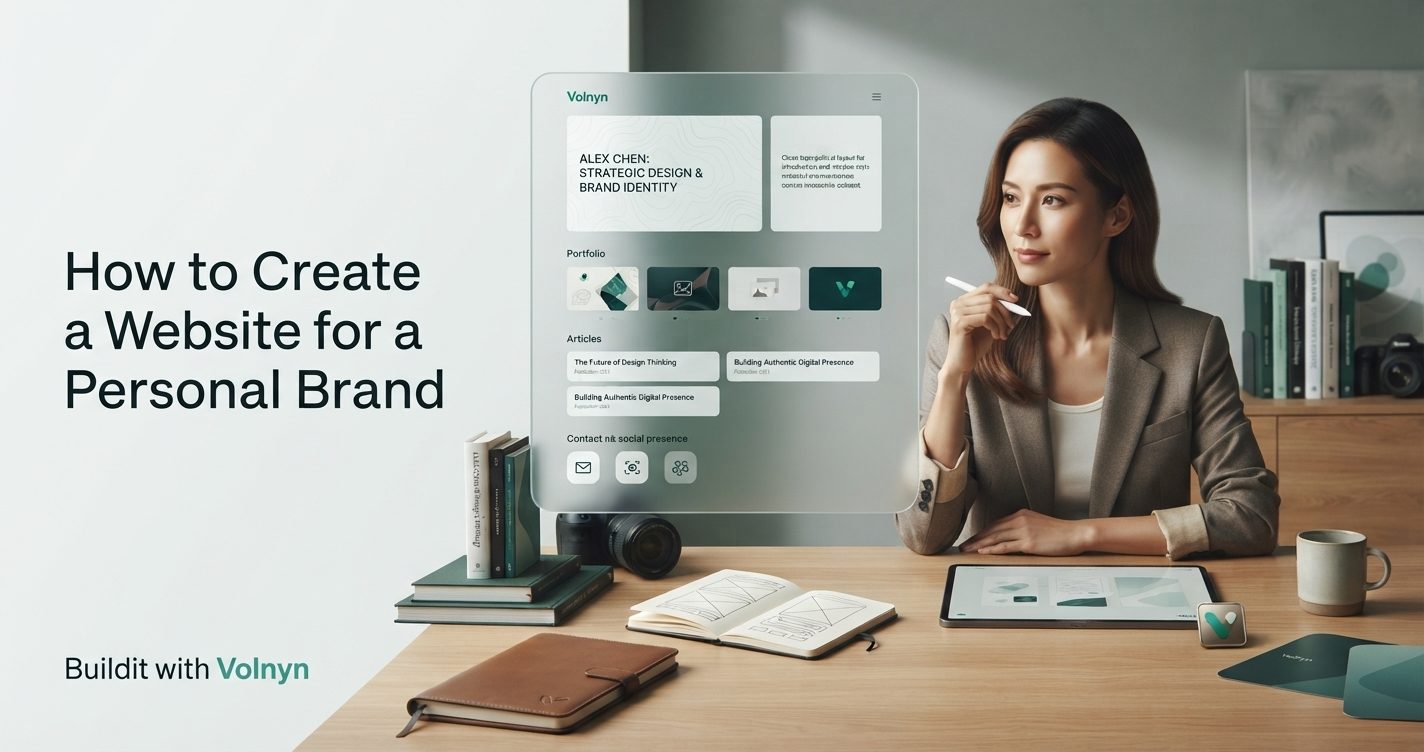
How to Create a Website for a Personal Brand
A personal brand website gives people one reliable place to understand who you are, what you know, what you offer, and how they can work with or follow you. Unlike a company website, the person is often the central product of the brand.
That makes the website less about filling pages with information and more about creating a clear, credible picture of your expertise. Whether you are a freelancer, consultant, creator, speaker, coach, designer, writer, or industry professional, the right structure can turn scattered online activity into a recognizable personal presence.
Here is how to build a personal brand website that is useful to visitors and flexible enough to grow with your career.
1. Define What Your Personal Brand Stands For
Before choosing a template or writing your homepage, define the idea you want people to associate with your name.
Ask yourself three questions:
- What do I know? Identify your strongest area of expertise or experience.
- Who do I help? Be specific about the audience you want to reach.
- What do I want people to do? Decide whether the main goal is to hire you, book a consultation, read your work, subscribe, follow you, or explore your portfolio.
A statement such as “I am a marketing professional” is too broad to guide a website. Something more specific, such as “I help early-stage technology companies explain complex products through clearer content,” gives you a much stronger foundation for your homepage, services, portfolio, and content.
2. Choose a Clear Website Structure
A personal brand website does not need to be large. It needs to answer the questions a new visitor is likely to have.
A practical starting structure is:
- Home: Introduce who you are, what you do, and the main action visitors can take.
- About: Tell your story, experience, background, and relevant credentials.
- Work or Portfolio: Show projects, case studies, published work, or other evidence of your expertise.
- Services: Explain how people can work with you if you offer professional services.
- Insights or Blog: Publish useful ideas that demonstrate your knowledge.
- Contact: Give visitors a straightforward way to reach you or request